Lapis lazuli can be exposed to water briefly for cleaning purposes, but it's not suitable for prolonged or frequent wetting. Due to its porous mineral composition, water exposure risks surface erosion, color dullness, and damage to pyrite inclusions. If you remember just one thing, know that lapis lazuli's vulnerability is determined by its calcite veins and pyrite content - factors more critical than simple hardness ratings.
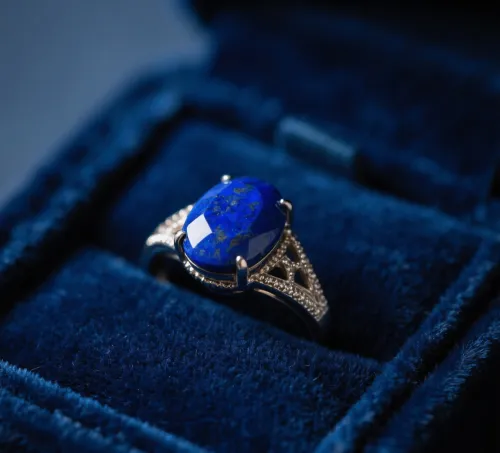
Imagine discovering a chalky white haze on your favorite lapis ring after washing hands, or hesitating to clean an antique lapis vase fearing you'll degrade its vibrant color. Jewelry wearers and collectors often face confusion about water interaction with this ancient stone. Some believe its royal blue hue indicates durability, while others avoid any moisture contact. In reality, lapis lazuli's relationship with water is nuanced - depending on mineral composition, structural integrity, and exposure duration. This guide breaks down six key considerations using geological principles, observable damage patterns, and practical care techniques. You'll learn to assess your specific lapis piece, recognize early warning signs, and implement tailored protection strategies without needing specialized tools.
A jewelry owner considering daily wear might assume quick rain exposure won't harm lapis earrings. This concerns people with active lifestyles who worry their pieces might withstand occasional showers or humidity. The confusion often stems from generalizations about minerals rather than lapis lazuli's specific mineral matrix.
In reality, lapis lazuli's porous structure creates varying moisture tolerance across specimens. While all lapis contains some calcite veins that absorb water, concentration differences mean Afghanistan-sourced stones with higher calcite levels may deteriorate faster than others. Crucially, freshwater immersion under 30 seconds poses minimal risk for essential cleaning, but structural fracture points tend to weaken significantly with repeated exposure - especially in saltwater or chlorine which can accelerate calcite dissolution.
Next time you wonder about brief water contact, practice this: Shine directional light across your lapis piece to identify fracture points. Avoid concentrated moisture exposure in these vulnerable zones. For antique pieces developing natural patina, prioritize protective buffing over wet cleaning whenever possible as age may reduce water sensitivity slightly.
A jewelry maker discovering water spots on beads stored in humid conditions might notice lapis responds differently to ambient humidity than direct liquid contact. People dealing with environmental moisture issues typically try to troubleshoot based on visible changes alone.
Technically speaking, lapis lazuli experiences accelerated micro-erosion in humid environments regardless of liquid contact. When stored improperly, porous calcite veins naturally attract atmospheric moisture which may cause internal leaching. This differs from chlorinated pool water damage where chemical reactions quickly alter surface chemistry. Notably, lapis beads experience cumulative exposure risks at stringing holes where friction enhances water penetration.
Try this assessment method: Store lapis with desiccant packs month-long in humid seasons. Compare bead holes to surface areas for differential color changes. Note that calcite-heavy sections typically develop uneven whitening patterns faster than dense areas when relative humidity consistently exceeds 60%. This awareness helps adapt storage before damage becomes visible.
Curious why some lapis pieces show damage while others seem unaffected by similar exposure? The answer lies beneath the surface. Many attribute damage purely to poor quality rather than natural material science.
The clearer way to see it: Lapis lazuli's vulnerability centers on two components. Pyrite inclusions ("fool's gold") can undergo sulfured oxidation when repeatedly wet, creating reddish halos around metallic spots. Meanwhile, calcite matrix veins dissolve under persistent moisture exposure leading to surface dimpling visible as pinpoint depressions under proper lighting. Structural weakness tends to originate where fracture planes intersect these porous zones.
Remember this distinction: Surface erosion follows calcite vein patterns while pyrite oxidation appears as rust-like rings. A simple testing approach involves gently running a dry cotton thread across textured areas. Thread snags indicate developing dimples - signal to minimize contact with moisture sources. Prioritize professional consolidation for such porous specimens.

That unexpected white haze on a favorite ring? It's your stone communicating structural changes. Collectors sometimes mistake damage for patina without understanding material science signals.
What's actually happening: Visible white powder (efflorescence) indicates mineral leaching through internal moisture movement. Surface-level bronzing of pyrite inclusions tends to precede structural degradation. More subtly, light refraction changes from microscopic pits may cause overall color dullness. Note that low-quality lapis imitation stones simply discolor rather than showing these characteristic degradation signatures.
Build observation habits: When examining lapis pieces, always tilt them under direct light. Look for variations in reflection intensity - muted spots suggest micro-pitting. For pieces with pyrite flecks, focus on possible oxidation halos which emerge as reddish tints around gold spots. Document these observations quarterly to track changes influenced by environmental shifts.
Facing a soiled lapis piece creates dilemma - risk damage versus maintaining appearance. Owners often compromise with methods that subtly harm pieces long-term.
A realistic approach recognizes occasional wet cleaning necessity but builds in safeguards. First: Limit wetting to under 30 seconds using cool, soft water. Immediately blot with microfiber - never air-dry - preventing water wicking into calcite veins. For frequent-use jewelry like rings, apply museum-grade microcrystalline wax for temporary water resistance protection. Crucially, ultrasonic cleaning remains ill-advised as vibrations exploit water-weakened structural points.
A simple decision framework helps: Begin with dry brushing instead of liquids. If smudges demand moisture, dab instead of immersion. Then ask: Does this piece contain visible fracture points or dense calcite? Post-cleaning, inspect with magnifier for changes along vulnerable veins. Integrate wax sealants before known exposures like beach vacations. These layered approaches balance care with preservation.
Environmental moisture poses silent challenges - that vase stored in seasonal humidity? It's facing unseen deterioration. Protection requires holistic strategies beyond direct wetting avoidance.
Beyond cleaning practices, consider ambient moisture. In tropical climates, lapis lazuli develops chalky residues when humidity consistently triggers mineral migration to surfaces. Counterintuitively, rapid humidity swings cause more dimensional stress than stable conditions. Modern solutions include silica-canister storage systems that maintain stable microenvironments for valuable pieces. Historical artisans understood this intuitively, using beeswax sealing to slow moisture progression.
For regular assessment: Place a small hygrometer beside lapis collections during humidity shifts. Note that when levels consistently exceed 65% relative humidity, desiccant packs become essential weekly preventatives. Ancient patina development actually offers guidance here - naturally oxidized surfaces form protective barriers over decades. Consider professional stabilization treatments for prized pieces in damp environments.
Remember: Lapis water interaction hinges on structural porosity rather than hardness; 30-second freshwater contact is safer than persistent humidity; pyrite oxidation presents as rust-like halos requiring different treatment than calcite erosion.
Start applying this knowledge simply: Next time you own a lapis piece, examine its texture and inclusions before selecting care methods. Notice your specific environmental conditions - is humidity your main enemy or occasional spills? A practical mini-habit involves storing jewelry in breathable pouches with desiccant in problem months. Recognize that sustainable lapis enjoyment comes from gradual awareness adjustments. Each observation adds to your assessment framework as you learn individual specimen characteristics.
Q: Can saltwater permanently damage lapis lazuli jewelry?
Saltwater poses enhanced risk due to both mineral content and physical residue. Sea salt crystals may accumulate in porous areas creating expanding pressure spots during drying cycles that can worsen surface pitting.
Q: Why does wet lapis sometimes smell sulfuric?
This typically indicates pyrite inclusion reaction where moisture triggers sulfur compound release - normal in untreated specimens but signaling possible long-term degradation if persistent.
Q: How to differentiate water damage from fake lapis discoloration?
Authentic water damage follows calcite vein patterns and creates characteristic pitting textures, whereas imitations tend toward even discoloration without structural changes under magnification.
Q: Does lapis lazuli's 5-6 hardness rating indicate water tolerance?
Not directly. Hardness relates to scratch resistance whereas water tolerance hinges on porosity and mineral stability issues that may occur independent of hardness measurements.


$
