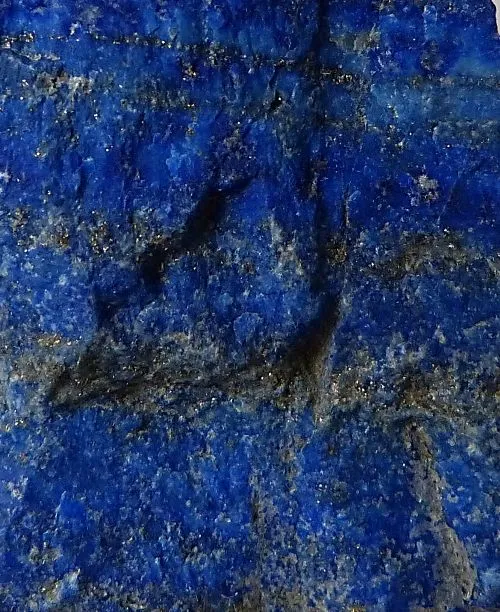
Authentic lapis lazuli reveals itself through three identifiable features: naturally random golden pyrite flecks, moderate hardness that scratches around 5-6 on Mohs scale with knife testing, and uneven coloration with visible white calcite streaks. Most crucially, remember that genuine lapis lacks mechanical perfection—uniform sparkle or bubble patterns typically indicate imitations.
You might be examining an unexpectedly affordable online necklace, questioning inconsistencies on a family heirloom, or doubting a vendor's confident claims about flawless stones. Such moments reveal a widespread challenge: the market brims with lapis look-alikes and treated specimens. This guide systematically breaks down verification methods, transforming uncertainty into practical observation skills. We'll move from fundamental identification techniques through geological origins to safe home verification approaches, equipping you to discern authentic lapis even under pressure.
When that online listing seems too good to be true, people often wonder: "Shouldn't all vibrant blue stones with sparkles be valuable lapis?" This assumption stems from marketing imagery rather than geological reality. We naturally expect precious stones to look flawless, but earth-made minerals follow different rules.
In reality, lapis lazuli forms through metamorphic processes combining lazurite, calcite, and pyrite—creating inherent imperfections. The clearer way to see it is: natural composition means variations in blue saturation (from royal to greenish-blue), randomly clustered pyrite flecks resembling scattered pepper, and irregular white calcite veining as nature's signature.
Start your examination under any bright light. Rotate the piece slowly, watching how pyrite specks catch illumination. Authentic pieces show what jewelers call 'organic clusters'—groups of flecks with uneven spacing and varied sizes. For practice, compare two stones side-by-side; your eyes will quickly register machine-made uniformity as artificial.
Heirloom guardians often worry: "Grandmother's ring has uneven coloring—does this mean it's fake?" These concerns fuse sentimental value with scientific curiosity, especially when expectations clash with irregular patterns.
Geologically-speaking, such variations indicate authenticity. Contact metamorphism in limestone creates uneven mineral distribution. The critical observation? Legitimate calcite veins resemble delicate fern patterns under magnification, while dyed fractures look like saturated ink blots. Natural formations may include subtle golden pyrite lines trailing into the matrix.
Notice surface details with a standard 10x loupe. Web-like vein structures with gradual color transitions? That's a reliability signal. Sharp margins with concentrated blue? This often suggests artificial enhancement. For jewelry, inspect pronged areas where dye tends to accumulate during treatment.
Exhibition vendors declaring "All blue stones labeled lapis here are genuine" overlook fundamental geology. Why would Afghanistan-source matter in authentication?
Traditional deposits contain signature mineral combinations. Afghanistan's historic mines yield specimens with lazurite-rich royal blue tones. Chilean sources may showcase more pronounced calcite patterns. All genuine pieces must contain all three signature minerals regardless of geography.
Consider how it forms: limestone metamorphism creates a granular texture—not glassy smoothness. When comparing samples, focus on structural integrity. Rub one area gently with an acetone-moistened cotton swab. Color transfer? That implies dye treatment. No dye bleed but visible grainy texture? That's an authentic marker.
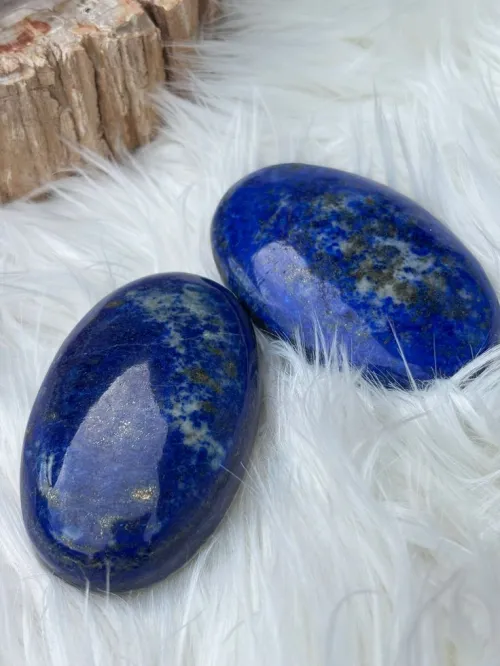
New collectors seeing 'perfect' vivid stones often assume: "This spectacular blue must mean high-quality lapis!" Unfortunately, synthetic replicas exploit this expectation discrepancy.
Authentic lapis exhibits depth rather than flat vibrancy. Its color may shift subtly under different lighting, unlike dyed howlite maintaining consistent artificial tones. Glass imitations frequently contain tiny air bubbles undetectable without magnification. Genuine specimens won’t show microscopic bubbles or unnatural translucency.
Use the brightness test: place the stone near paper under strong light. Real lapis remains rich and opaque, whereas thinner counterfeits may reveal gray undertones. With beads, gently tap one against ceramic. Listen for a satisfying "tock"—not the dull "thud" of plastic composites. Natural stone density creates distinctive sound resonance.
The scratch test often worries owners: "Won't scratching damage genuine lapis?" But controlled testing on an inconspicuous area reveals crucial mineral data without significant harm.
Scientifically, mineral hardness provides identification evidence. Authentic lapis ranks 5-6 on Mohs scale—softer than quartz but tougher than glass. A standard steel knife blade tends to create a visible silvery line on genuine surfaces. Deeper gashes imply softer imitations like melted-and-dyed composites.
Conduct safe verification in four steps: First, choose an unpolished back surface. Second, warm the stone briefly in your hands. Third, press it against your cheek or wrist—natural minerals dissipate heat slower than glass. Fourth, using medium pressure, attempt scratching. Moderate visibility of marks? That aligns with authentic hardness.
Heft provides immediate clues. Real lapis feels satisfyingly dense compared to similar-sized pieces. Synthetic versions tend to feel noticeably lighter. Weight discrepancy often indicates polymer composites or pumice-based substitutes.
Owners observing blue skin marks from jewelry worry: "Could fading mean my lapis is fake?" Actually, both authentic and treated specimens require specific care, but their responses differ.
Calcite components can dissolve during improper care, revealing key insights. Surface damage may expose white grainy spots after contact with acids—a vulnerability real lapis shares. However, color bleeding onto skins or cloths more frequently stems from dyes applied to enhanced specimens.
Handle genuine lapis systematically: avoid ultrasonic cleaning (water pressure erodes delicate calcite), store separately from harder gems like diamonds, and limit sun exposure—prolonged light can affect color depth. For high-value pieces, conservationists recommend annual professional inspections.
Focus on consistent reliability factors: authentic lapis consistently displays organic pyrite distribution, maintains moderate hardness at 5-6 Mohs, and shows mineral-related unevenness. Regular observation builds instinct.
Next market encounter, try this minimal verification protocol: first, rotate the item under light watching fleck randomness (reject machine-perfect patterns); second, request mining origin details (premium sources support legitimacy); third, use your fingertip warmth for thermal conductivity checks (real stone warms slowly). These layered observations create reliability without specialized tools.
Remember—verification skills grow progressively. Each lapis you examine deepens pattern recognition. Start small: during upcoming museum visits, compare documented specimens against your observations.
Q: Why does real lapis lazuli have golden spots?
A: Pyrite inclusions naturally occur during formation. Genuine pieces may contain random mineral deposits that resemble flecks of gold rather than synthetic glitter.
Q: Does lapis lazuli fade over time?
Prolonged sunlight exposure may reduce natural color saturation in untreated stones. This characteristic distinguishes it from synthetic pigments maintaining artificial vibrancy.
Q: How does authentic lapis differ from sodalite stones?
Authentic lapis contains interconnected calcite patterns and pyrite flecks, while sodalite tends to show more translucent areas without metallic flecks.
Q: Why might lapis jewelry leave blue marks?
Skin marks typically suggest surface dye rather than genuine lapis. Natural specimens may release microscopic particles but won't consistently stain.


$
